A residential roll-off is loaded by the homeowner, not hauled away by a crew, which is the line that trips people up: a dumpster rental is not junk removal , you fill it, the truck takes it. The five sizes cover the…
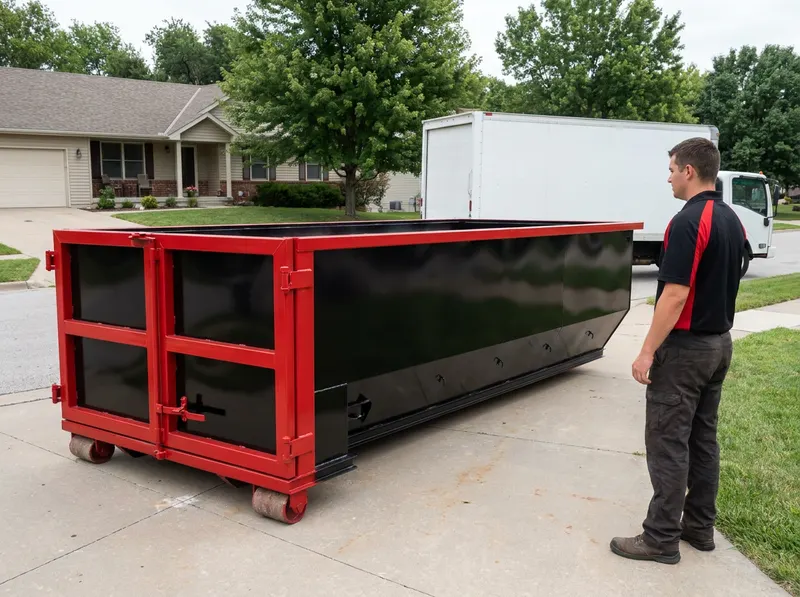
A residential roll-off is loaded by the homeowner, not hauled away by a crew, which is the line that trips people up: a dumpster rental is not junk removal, you fill it, the truck takes it. The five sizes cover the full range of Springfield home projects. The 10-yard holds about 4 pickup-truck loads and fits a single bathroom or a small garage cleanout; the 15-yard and 20-yard suit a kitchen remodel or a Rountree bungalow attic clearout; the 30-yard swallows a full estate clearing in University Heights or a roof tear-off; the 40-yard is for whole-house gut jobs and new-construction debris in Bradford Park. The trade-off is simple: a bigger bin costs more and eats more driveway, so the right call is the smallest container the debris actually fits, not the largest one available.
Driveway space decides placement. The older lots in Phelps Grove, Midtown, and Woodland Heights have narrow drives and mature trees, so a 10 or 15-yard often lands cleaner than a 30. Step 1: call or text a photo of the pile. Step 2: our team recommends a size and quotes the flat price. Step 3: the roll-off is delivered on the agreed day, set on boards to protect the concrete. Step 4: you load it over the rental period. Step 5: we haul it to the Greene County transfer station and the disposal is already covered in the flat rate. That flat-rate structure is the non-obvious part, most surprise bills come from tonnage overages, and these prices fold the dump fee in, so $795 for a 30-yard is $795.
Weight and content limits still apply, because the container rides on a public road under state and federal load rules. Heavy debris like concrete, brick, and dirt fills a small bin fast and should be split into a 10 or 15-yard rather than piled into a 40-yard; overloading a roll-off past its axle rating is unsafe to transport and follows federal load limits. Keep prohibited items out: latex and oil paint, motor oil, car batteries, and tires are household hazardous waste and are handled through Greene County's separate drop-off program, not the dumpster. Appliances with refrigerant fall under EPA refrigerant rules and need the coolant removed first. Old electronics from a Galloway Village or Doling home should go to local recycling rather than the bin. Yard waste from Delaware and Oak Grove tree work loads fine and is often diverted for composting; the composting guidance from EPA explains why green debris is kept separate at the transfer station.
A roll-off on a public street rather than a driveway may need a right-of-way permit from the City of Springfield; the city public works office issues those, and driveway placement needs none. For DIY demolition, wear eye and hand protection while loading, the same OSHA construction standards that cover jobsites cover nail-heavy remodel debris. Contractors sizing a build can check the home builders association waste estimates, and homeowners planning a broader cleanout can use the sustainable materials management framework to separate reuse from trash before the bin is even delivered.
Every job gets a firm, written price after an on-site visit.
Tell us about your residential roll-off rental job in Springfield and we'll send a clear, written quote, usually the same day.
 Abgail Dumpster Rental